Spring EAI Field Trip to Yokohama
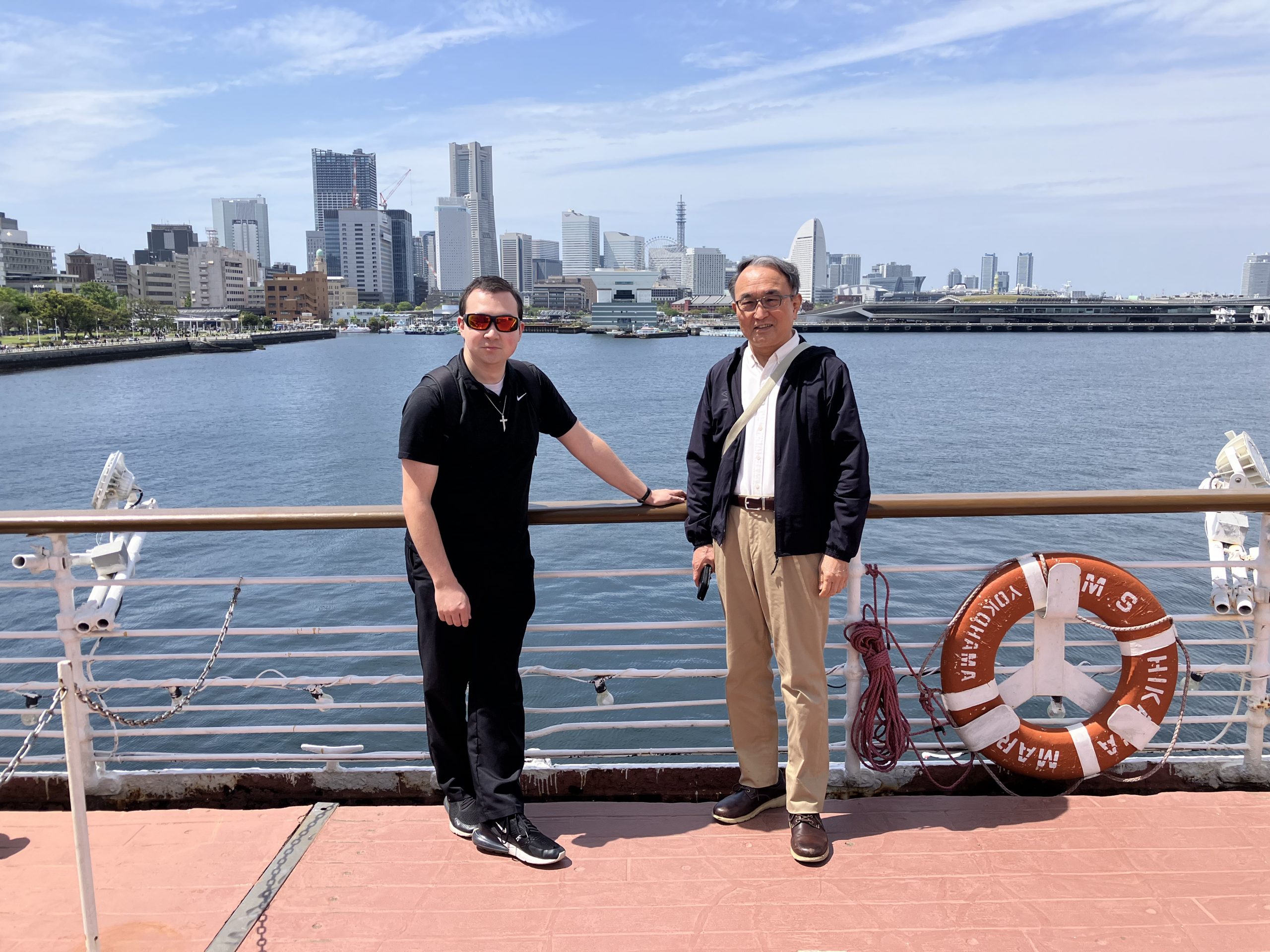
Good day, my name is David Tsunoda. I am a 27-year-old US-Japan dual citizen from the United States and am studying at Tokyo Christian University. I was born in Portland, Oregon, grew up in a Christian household, and have lived in multiple American states over the years, specifically California, Washington, Illinois, Texas, and of course, Oregon. I knew from a very young age that my calling was connected to my mother’s home nation of Japan, and so for ten years after becoming a legal adult in the United States, I worked and found several promising opportunities, but sadly, none of them worked out, though my faith in the One True God has kept me going, however difficult that was. Upon running out of leads and with my Japanese grandfather, a retired pastor of 60 years, offering to assist with tuition and legal paperwork, I decided to go ahead and move to Japan in the spring of 2026. This has proven thus far to be the right move, and God has continued to provide for me. I am currently an EAI student on a short-term commitment of just one trimester, but I have been accepted into the BA program, which I will be starting in the fall. I fully intend to complete this program, assuming it is God’s will and that He will provide the financial means, to do so.
Now the Lord said to Abram, “Go from your country and your kindred and your father’s house to the land that I will show you. And I will make of you a great nation, and I will bless you and make your name great, so that you will be a blessing. I will bless those who bless you, and him who dishonors you I will curse, and in you all the families of the earth shall be blessed. So Abram went, as the Lord had told him, and Lot went with him.
– Genesis 12:1-4a
I relate a lot to this passage, having arrived in Japan mostly as a leap of faith. The irony however, is that this is my mother’s home country, and Yokohama is her birthplace. Visiting Yokohama was as trivially interesting to me as it was personally special.
Currently, I am an EAI (East Asia Institute) at Tokyo Christian University, the only one in the entire school this semester, though I’ll be starting my four-year program this fall. Because of this, my university threw in a few extra benefits for me, including this Yokohama Tour that I did with Yamato-sensei and Kajiwara-san on the 18th of April this year. And what a blessing it was! My tuition fee this semester, generously covered by my grandfather, paid for all the expenses for this tour.
Old Chinatown
After a 90-minute train ride, we arrived in Yokohama and walked straight to the old Chinatown. I discovered more about this place at the museum later, namely that this district has been around for a few hundred years.
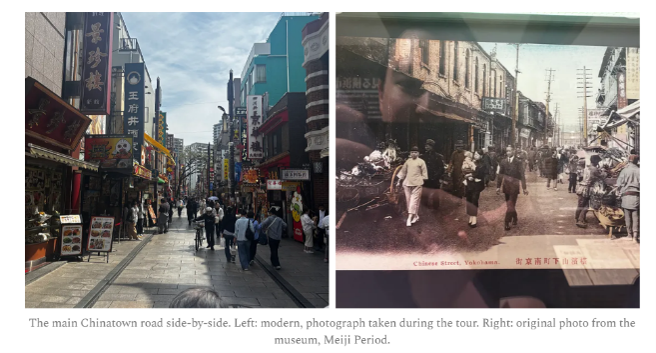
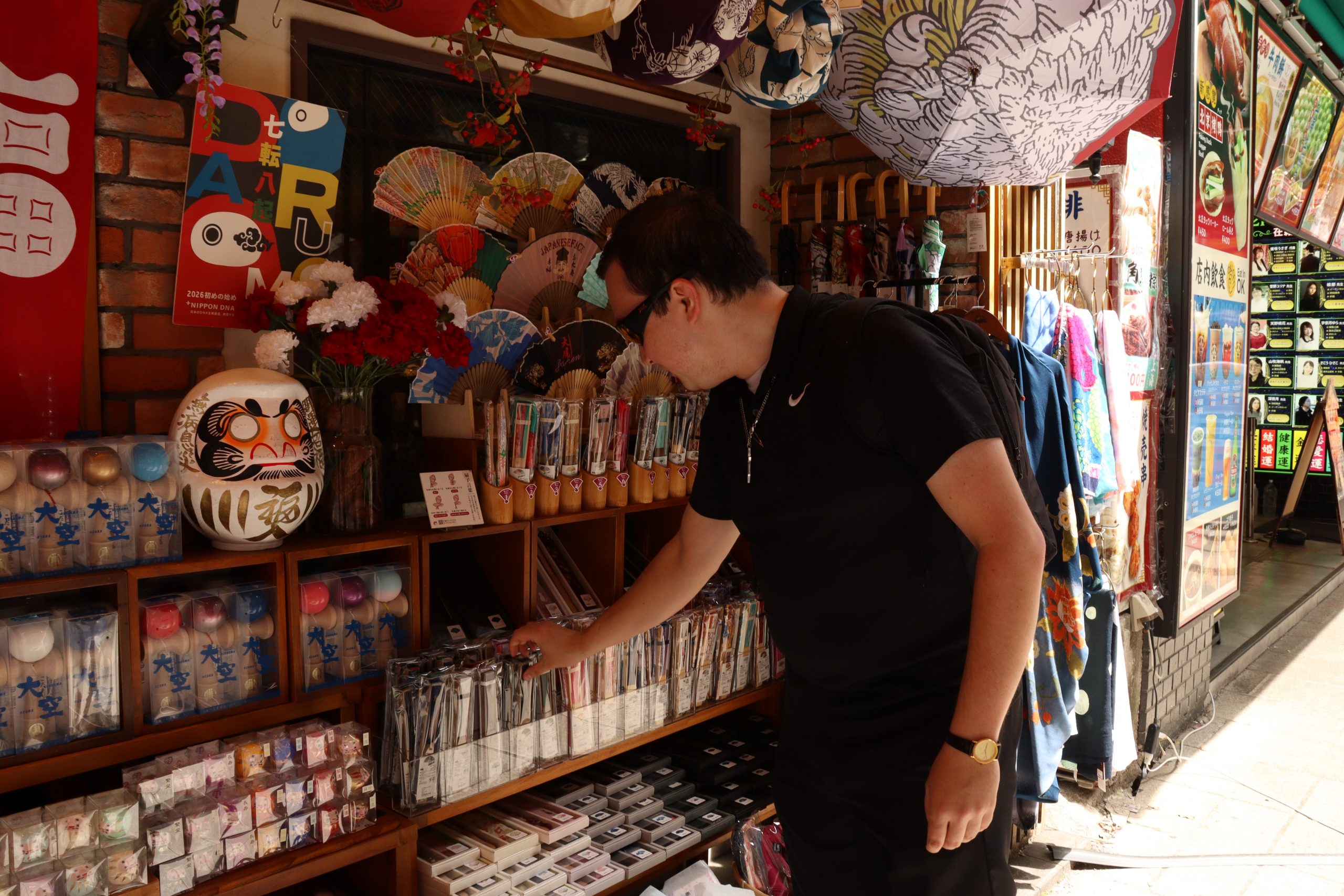
As you can likely discern, this road is quite narrow. Only one delivery vehicle passed through. Such environments are not uncommon in Japan, but nevertheless, it very much felt like how I’d imagine much of China is. When we arrived and because I was the only student, I was free to dictate the pace of the tour for the most part. So the three of us walked down the main road, though I was asked multiple times if I wanted to stop and eat somewhere. Of course I did; I hadn’t eaten all day up to that point, but I wanted to see what was available first!
We eventually grabbed a bite, which my tuition fee covered. I wanted to get something I hadn’t had before, obviously, and especially since I’m the kind of guy who is adventurous and likes to try new things. I think of my own life just like a museum, and all the different and unique experience I have are the exhibitions. If there is one thing you will take with you to Heaven and the New Creation, it’s your memories.
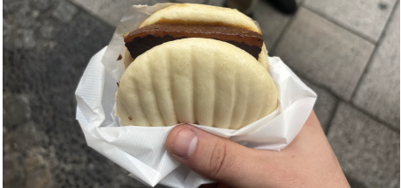
This principle applies to just about everything I do, and if any of you have or will travel(ed) with me or gone out to eat with me, you’ll see it take effect. In the case of food, I order like I’ll never get to eat there again, even if the chances are high that I will. In this case, I got a simple pork bun.
Marine Tower
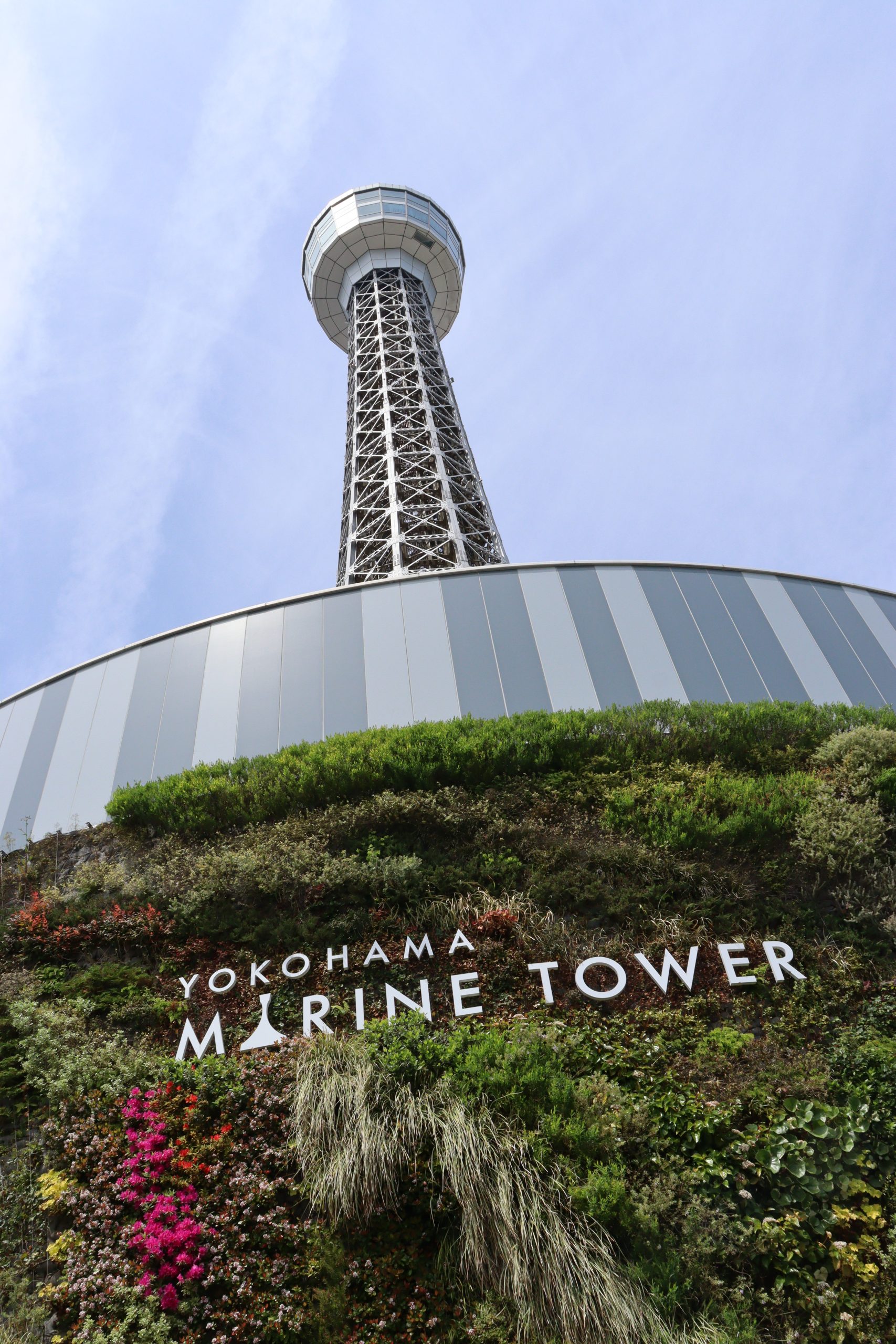
Not a far walk off from Chinatown was the Marine Tower, which is pretty much a miniature Tokyo SkyTree. I did visit that place too, 10 years ago. It’s good times.
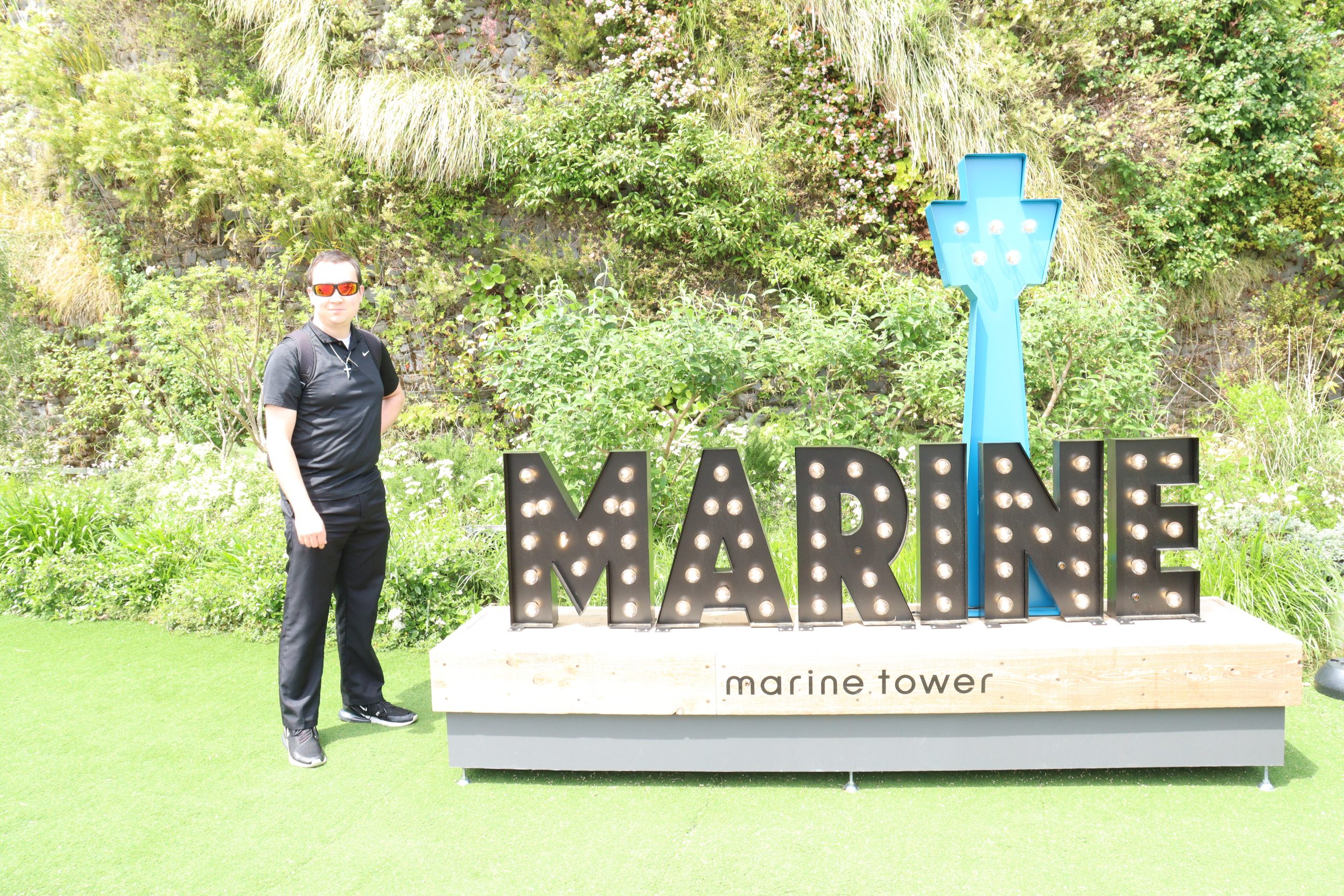
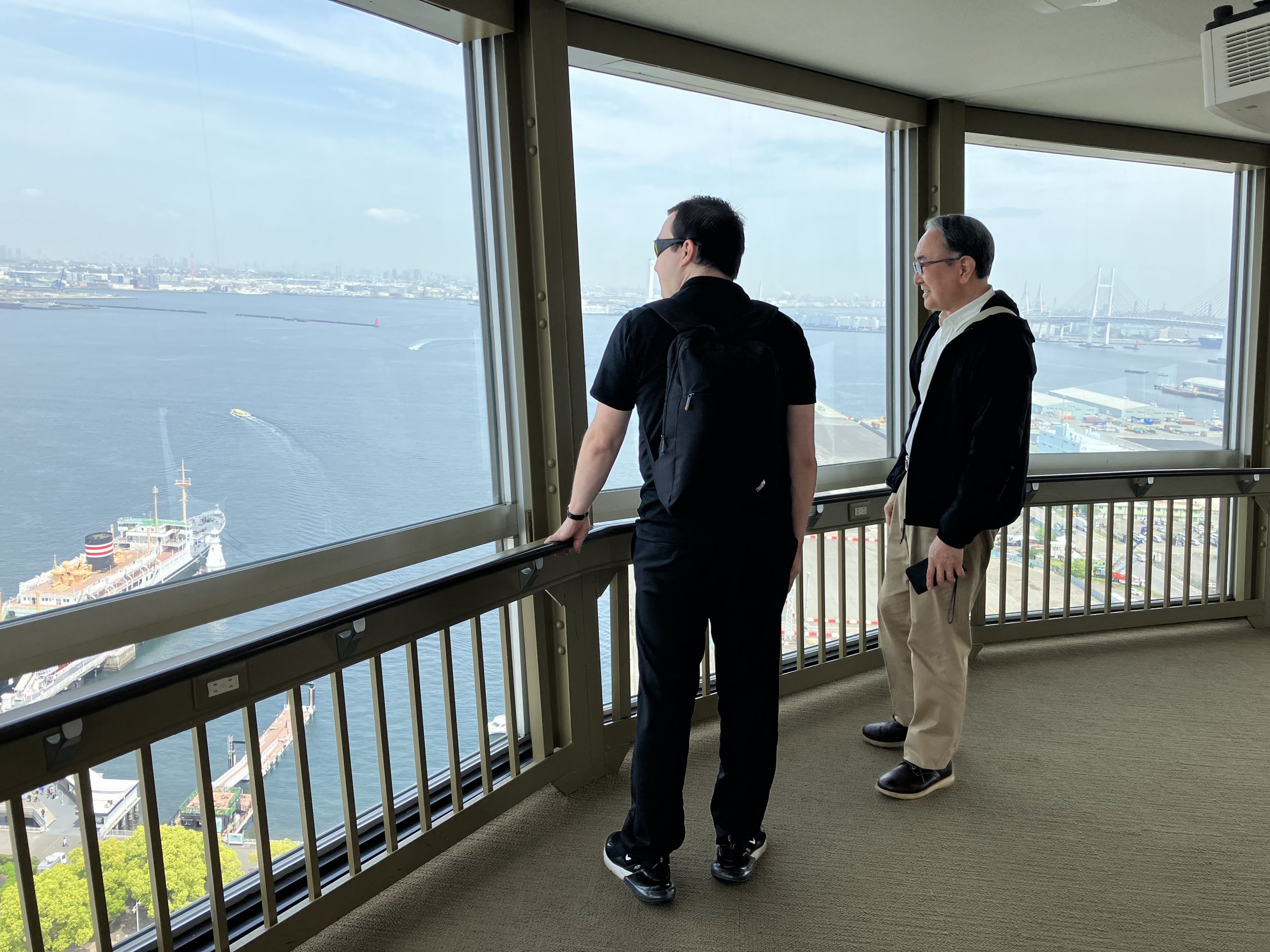
Going up there was pretty much the same experience as visiting the top of the SkyTree, or the Space Needle in Seattle, Washington. Though the Marine Tower didn’t have a cocktail lounge nor a 1-horsepower engine rotating the entire deck every 47 minutes. What it did have, however, was extremely respectful staff and guests!
The gentleman who escorted us to the elevator was very professional. When we guests were in and as it was going up, he gave a deep bow and stayed like that until we were out of sight. There were a couple foreigners at the top too, but as expected, 95% of the people you encounter here are Japanese, who too were very polite and kept to themselves.
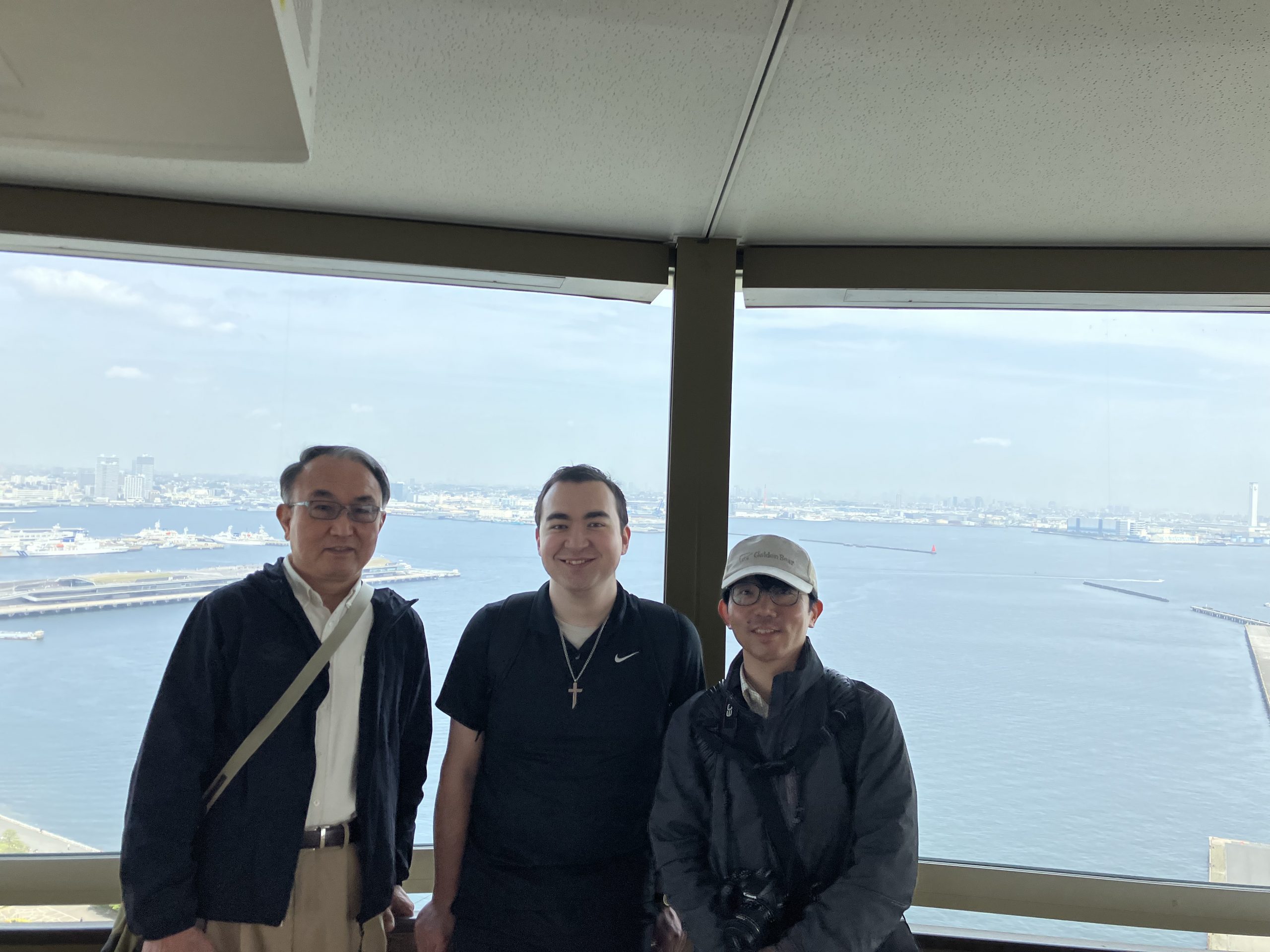
And if you’ve watched the Studio Ghibli film From Up on Poppy Hill, you might recognize a few things. And if you haven’t, don’t worry, I have the movie in its own section in this article, so it won’t be spoiled for you. But please, do go and watch it, it’s really good. And it’ll help you appreciate some of the experiences available in Yokohama even more!
We stayed up there for a while, enjoying the scenery and taking photos. Kajiwara-san brought with him a camera and took many photos of his own for the school.
The NYK Hikawa Maru
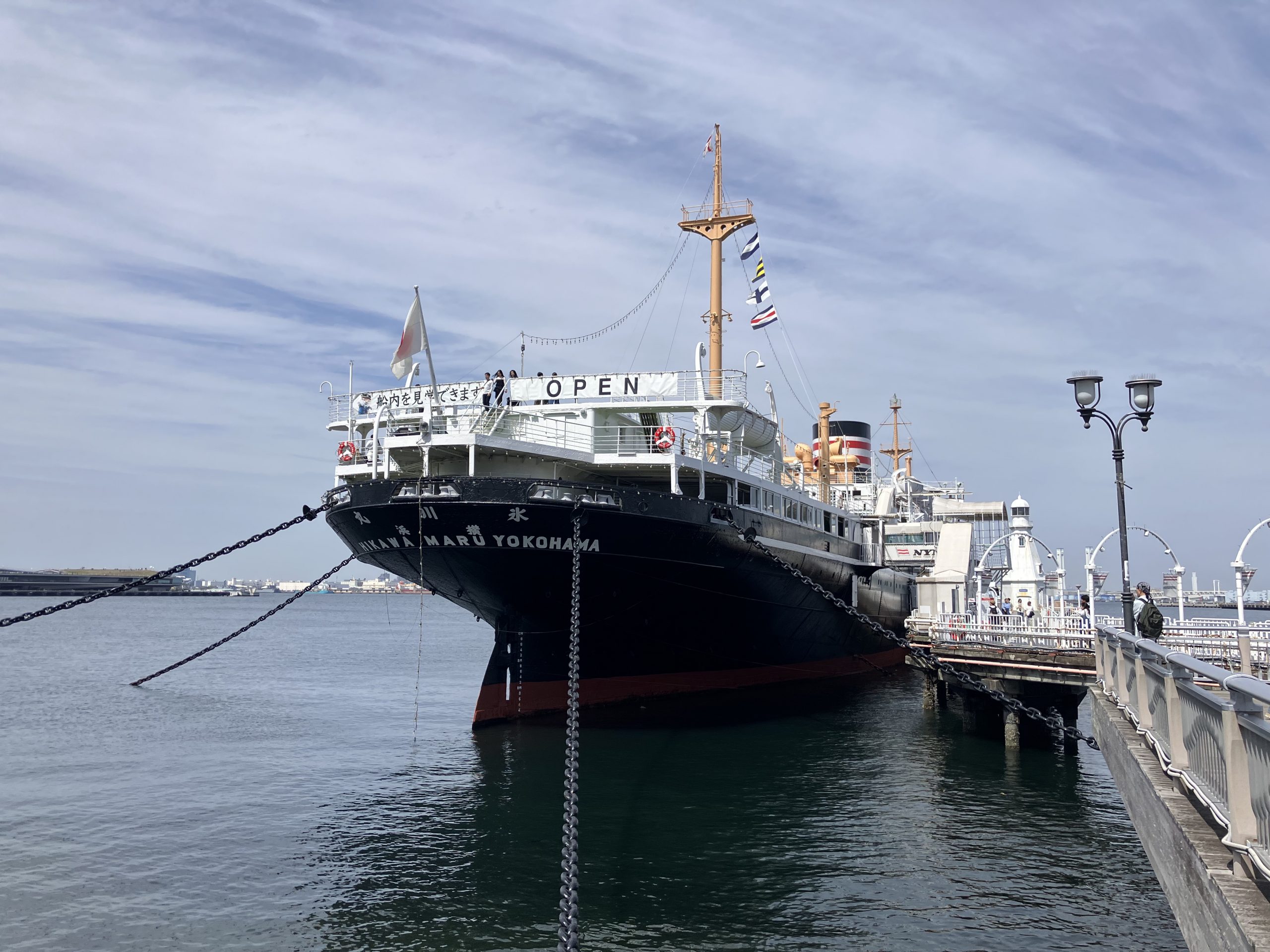
This thing was like a miniature Titanic. In fact, both Yamato-sensei and Kajiwara-san recognized the similarities between the two vessels as we navigated the halls inside.
But for me, this wasn’t just some neat museum, it became my favorite location that we visited on the tour, specifically because I had personal connections to this ship, since my mother was born in Yokohama and this ship has a connection to From Up on Poppy Hill, which was first introduced to me in my high school Japanese class. I wasn’t expecting it to become my favorite at all!
I’m also quite a history buff (there really needs to be more of us, man!), and this ship has plenty of history, which I’ll elaborate on whenever relevant.
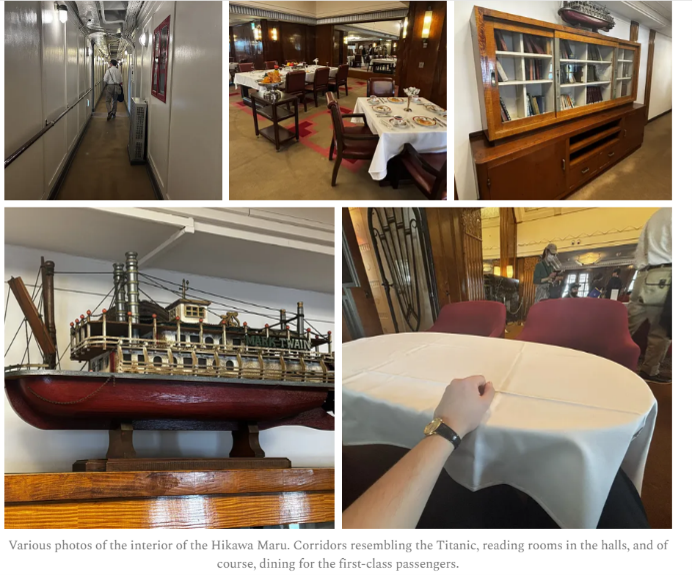
As you can probably discern by now, the Hikawa Maru served multiple purposes while it was active from 1929 – 1960. Imagine that: one-third of this ship’s life was spent during the Great Depression, and another one-fifth during the Second World War (the Pacific War, as it’s called here in Japan). This thing was one heck of a hardy survivalist for a ship.
At the time of service, one of Japan’s major exports was raw silk, and this vessel was one such trade ship that delivered to the United States by way of Seattle (before World War II, of course), where its first voyage was destined. The goods were usually then transferred to a train and delivered to New York City by way of the Great Northern Railroad to then be put on the market or delivered to Europe across the Atlantic.
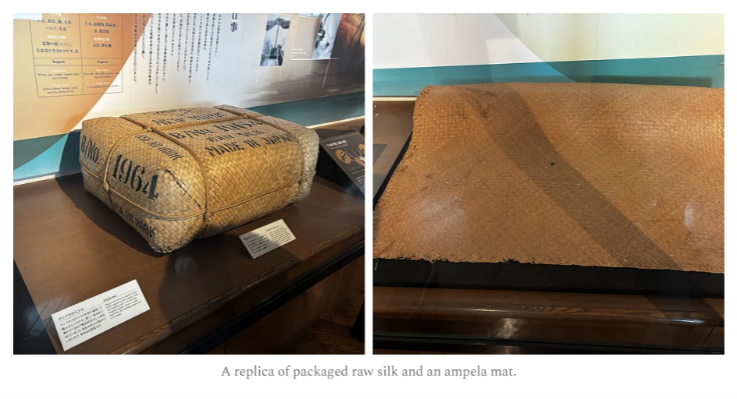
Raw silk is not exactly a durable material, so it had to be carefully wrapped in bunkoshi, a special kind of paper, placed in a cotton bag, sealed with lead, wrapped with waterproof paper, and finally, the ampela mat.
Ampela mats are made from a certain plant of the Cyperus microiria family and was used extensively to wrap goods back then. As times have changed, and because plant matter doesn’t really hold up over time, whatever preserved original ampela mats left out there are very valuable.
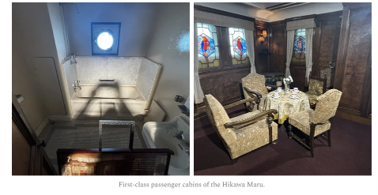
And of course, the ship was used to transport passengers for the sake of travel. These were the days before commercial flights, after all. As expected, there were tiered tickets you could get from premium to first-class to lower class. Though even the most expensive, deluxe cabins you could get were still quite small as you can deduce by the photographs. You still had to sleep in a twin bed, for crying out loud. My dorm bunk is bigger than those!
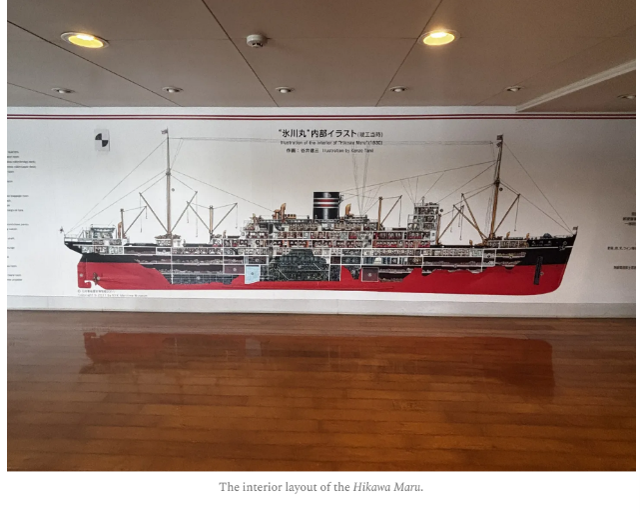
This is one of the last things you see in the museum, and this mural is what made me appreciate ships so much more. Most of those rooms, we didn’t even get to look at. There is so much space dedicated to cargo, luggage, and fuel, not to mention all of the food, cabins, amenities, engine room… the list goes on.
It dawned on me just how much manpower, precision, materials, money, time, and work it took to build this thing, and to use it. That’s a lot of logistics and maintenance to keep track of! All those bundles of saw silk, all those tanks of fuel, all those containers of food… it’s mind-blowing to me just to ponder how much coordination it took to run this thing, let alone for 30 years that include the Great Depression and World War II.
Yamato-sensei bought some things for his wife from the gift shop, then we walked the pier known as Yamashita Park.
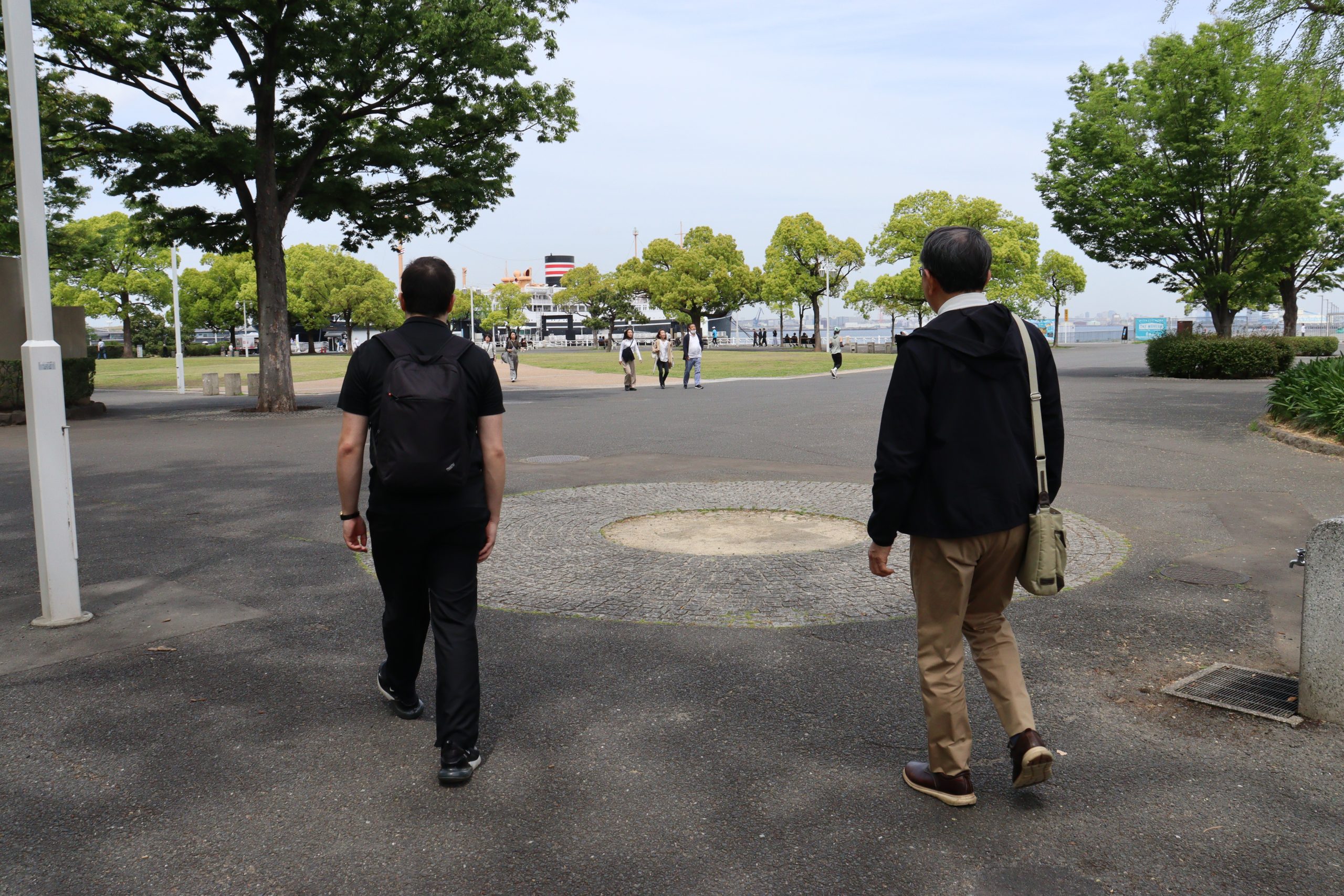
Yokohama Archives of History Museum
Well, the history museum in Yokohama was a delightful experience.
Quick side note: the block where this museum is happens to also be where the oldest church in the entire country is. Catholicism started in Kyushu during Sengoku Jidai, but Protestantism began in Yokohama. It was a Saturday, so we couldn’t go inside, but it’s still very much an active church.
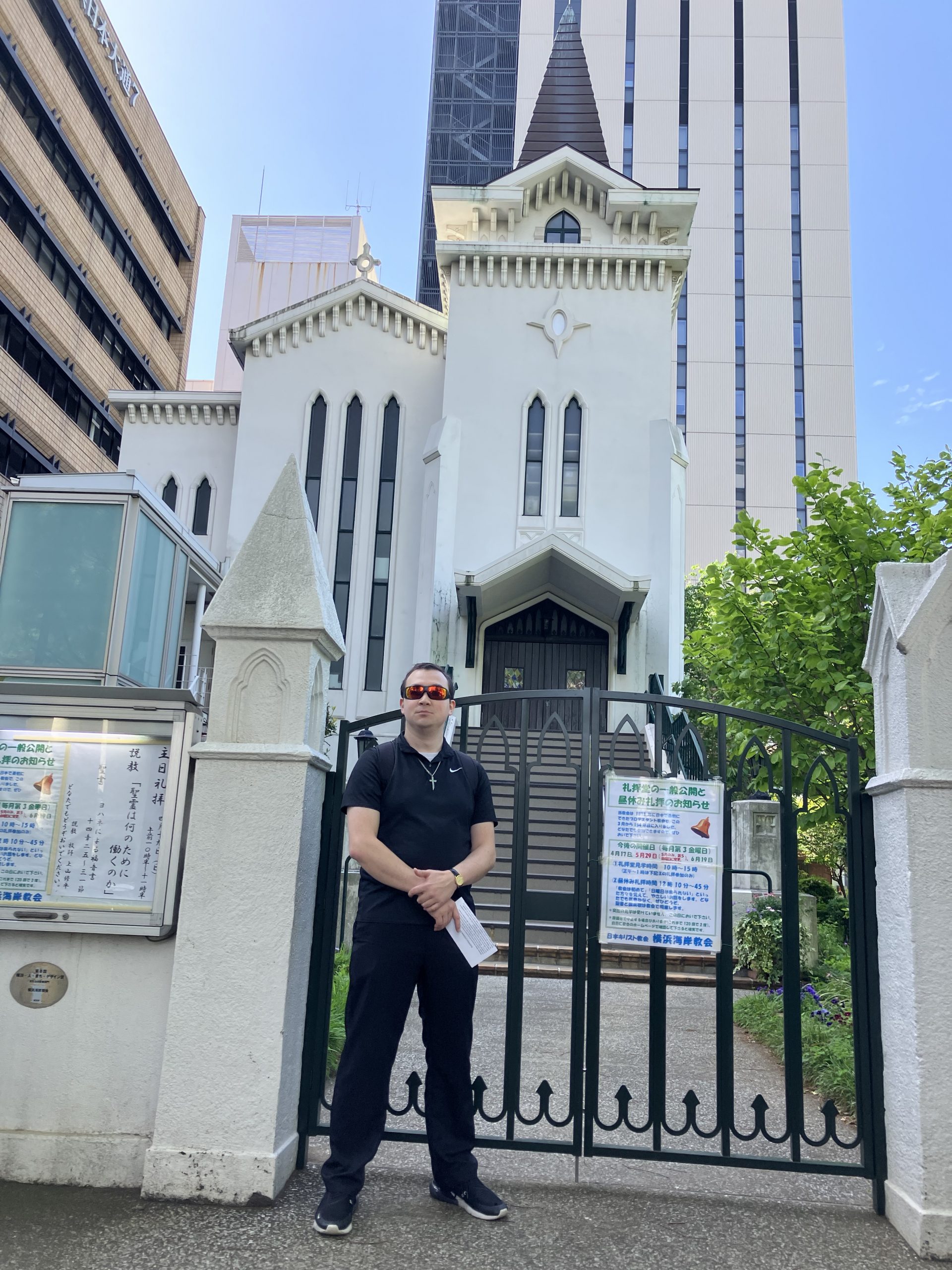
Japan is a fairly irreligious country, and has been since our defeat in World War II. Sure, the majority of the population are Shinto-Buddhists, but most of them practice this double religion for cultural and political reasons, not necessarily spiritual ones. We also take immense pride in our cultural identity. Sure, much of our culture was heavily inspired by India and China, but we still want to be our own thing.
As a result, all denominations of Christianity combined are fairly uncommon here. During World War II especially, Christians were heavily persecuted (which makes sense). This church was one such victim of such persecution, but it survived, thankfully.
This museum dedicated itself to assembling pretty much any historical records and originals it could get its hands on from the Edo and Meiji periods, particularly after Yokohama’s urbanity was devastated by the Great Kanto Earthquake in 1923 and the American firebombing raids in 1945. As a result, many, many historical records and relics were tragically lost. What we have left is lucky to have survived, and the museum holds many of them.
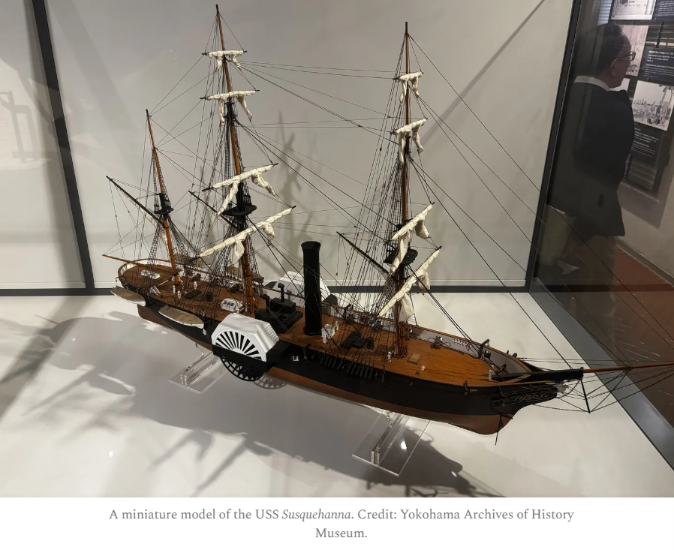
You might have seen that acronym ‘USS’ before, like the USS Enterprise, which was also a real ship, not just the iconic one from Star Trek television show. It was the most highly decorated American aircraft carrier during World War II.(2)
It simply stands for “United States Ship.”
Anyway, the Susquehanna was a steamship built in 1850 and was part of the fleet and indeed the flagship of the Perry Expedition, which was a diplomatic (and military) voyage to get Japan to open up to the world stage after the Tokugawa Shogunate had isolated the country for 200 years, transitioning the country from the Edo Period to the Meiji Restoration, which was a pretty difficult time for the Japanese, especially since the treaties they were forced to sign were unequal like those signed by China after the Opium Wars. Many Japanese emigrated to the United States around that time, and it was then when the concept of sushi became more commonplace there.(3)
Part of how this manifested was the relationship between gold and silver among Japan and the West, which resulted in much Mexican silver being traded for high-quality Japanese gold. Huge rip-off, you ask me! Japan could really use that gold these days, especially since we did have our own gold mines here like on Sado Island in the Sea of Japan.
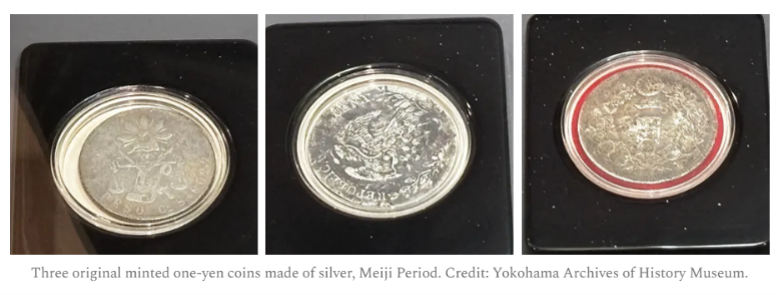
The one on the right is particularly interesting. You see, it was during the late Edo Period when these unequal treaties came into effect, and therefore the exchange of Mexican silver for Japanese gold. Well… much of that silver got minted into these coins specifically for foreign trade, and that one on the right was minted in the 11th year of the Meiji, so 1878, and its face value was just one yen at the time.
One yen in the year 2026, almost 150 years later, is basically worthless, they’re even worth less than American pennies, which we stopped minting last year (about time!). The ironic thing however, is that the copper and zinc required to make a penny cost about 1.4 cents, but the aluminum for making 1-yen coins costs about 0.3 yen per coin, so even though it’s worth less than a penny, it’s nearly x5 more cost-effective.
Of course, because of technicalities and governmental rhetoric, the US mint actually does still make pennies, but only one a month, making them extremely valuable collectors’ items.
100-yen coins are definitely one of the most useful denominations of the yen here in Japan, but they’re also not that valuable, clocking in at around 60 cents. However, my younger brother, an avid coin collector, got me into it a little bit as well, and I did find a few 100-yen coins worth keeping. But, I have yet to find one from Showa-41 (1966) or earlier, though it’ll be a great day when I do because that was the last year they were made of silver.
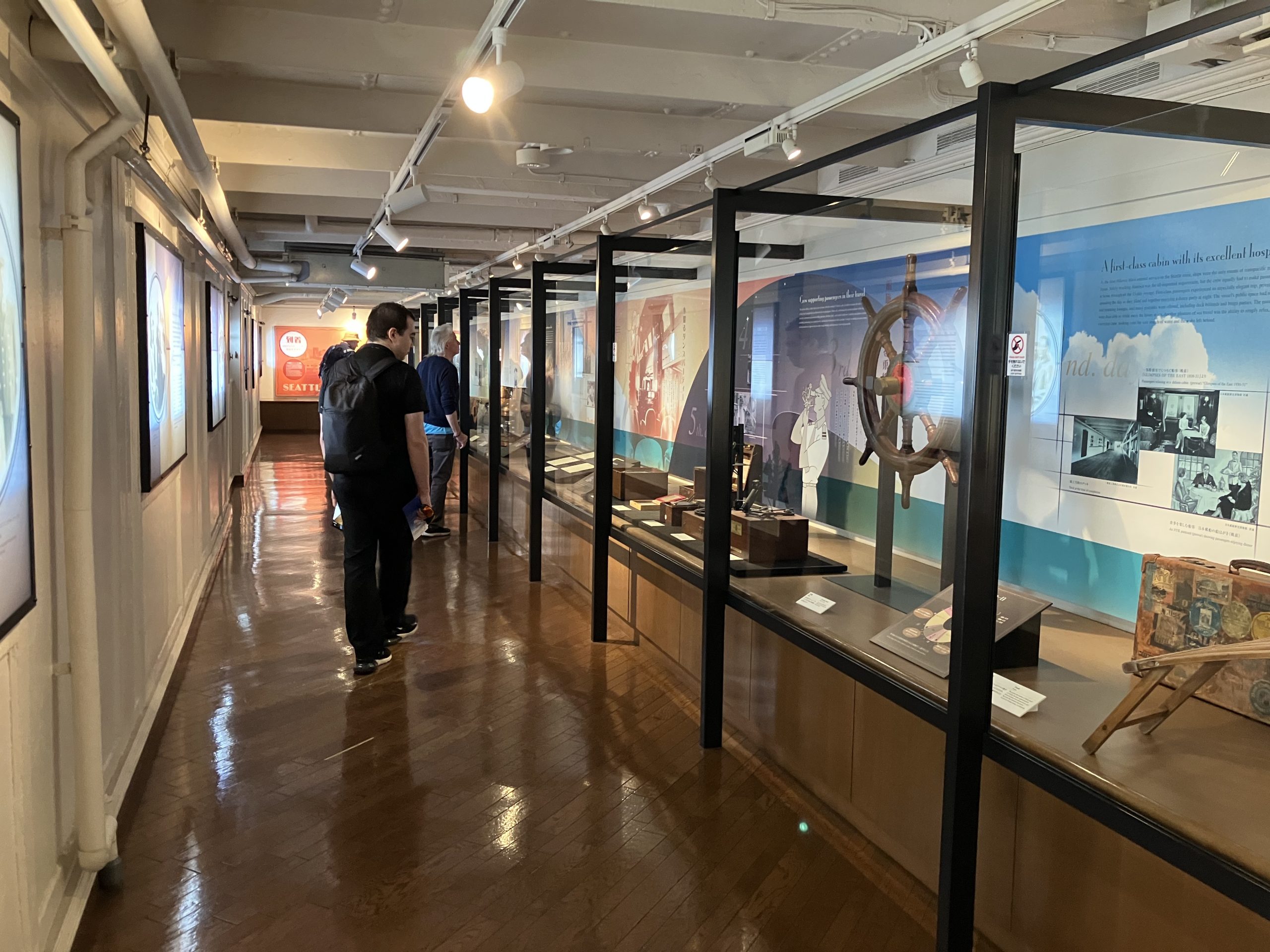
The photos I shared are only a fraction of what can be seen and explored at the museum, and if you ever get the chance to go, I highly recommend it. It was one of the best experiences of my life, especially as a history buff.
Overall, the Yokohama Tour I got to do with Yamato-sensei and Kajiwara-san was an absolute treat. I’m very grateful to have gone and look forward to exploring more of Japan and learning more of its history.